Morocco

37.7
Population 2023 (Millions)

0.7
HDI Score
2022 (Max. 1)

70.9
SDG Score
2023
(Max. 100)

0.4
Gender Inequality
Index Score
(Max. 1)

51
Internet Inclusivity
Index 2022
(100 countries)
Overview
Projects

- Partner(s): UNFPA (Funder)
This project will deliver a structured training program in applied data analysis through a hybrid format that combines in-person and remote sessions. The inception package will finalize the curriculum, assess baseline competencies, and provide essential learning materials. An interim report will track training progress, monitor individual learning outcomes, and present preliminary analytical outputs. At the conclusion of the program, participants will produce 3 final reports supported by reproducible scripts and visualizations.
- Partner(s): UN Women Morocco (Funder)
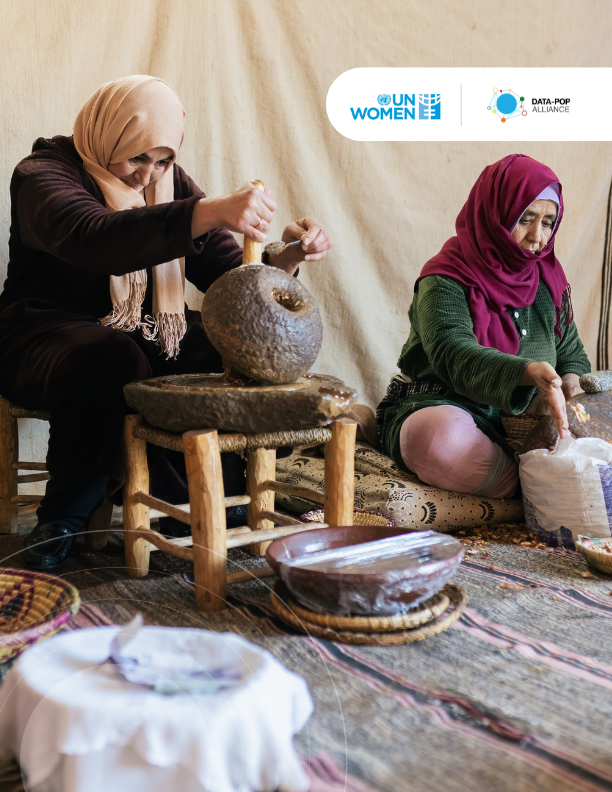
This consultation will support the Ministry of Economy and Finance, through its Directorate of Studies and Financial Forecasts, in strengthening gender-responsive policymaking by introducing innovative and appropriate methodologies for the collection and analysis of unconventional data. By integrating non-traditional data sources into national analytical frameworks, the initiative seeks to enhance the monitoring of efforts undertaken in the area of gender equality, deepen understanding of the structural causes and manifestations of gender inequalities, and identify targeted, evidence-based policy levers to reduce these disparities. This approach will generate actionable insights to inform decision-making, improve planning and resource allocation, and ultimately contribute to more inclusive and equitable development outcomes.

- Partner(s): Moroccan Ministry of Economy and Finance, UNDP Morocco (Funder)
This project, supported by UNDP Morocco and the Moroccan Ministry of Economy and Finance, aimed to improve official statistical methodologies by using Big Data, in order to improve the timeliness and reliability of progress towards the Sustainable Development Goals. Additionally, this project contributed to strengthening the Moroccan digital ecosystem by improving the design, implementation, and monitoring of fair public policies, and informing better investment decisions towards achieving g the SDGs. Our organization conducted a benchmark study and developed three pilot publications to monitor priority indicators for sustainable development in Morocco: mental health (target 3.4) using Google Trends data; water stress (indicator 6.4.2) using earth observation; and ICT skills (indicator 4.4.1) using data collected through an online survey in Facebook.
- Partner(s): Agence Française de Développement - AFD (Funder), Economic Research Forum (ERF)
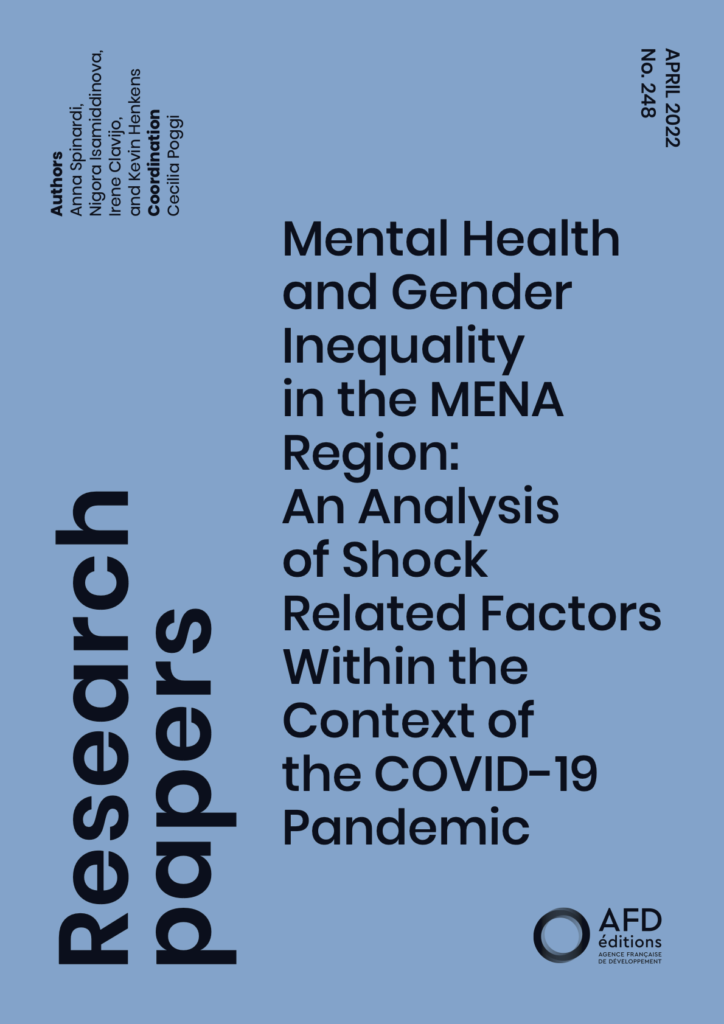
In partnership with the Agence française de développement (AFD) and the Economic Research Forum (ERF), DPA produced a research paper investigating the potential associations between the socioeconomic impacts of COVID-19 on gendered mental health inequalities in the MENA region. The study adopted a mixed-methods approach, including a thorough literature review and quantitative data analysis using the Oaxaca-Blinder (OB) decomposition model. The results of this study were used to produce a policy paper with targeted recommendations to mitigate the impacts of the pandemic on women’s mental health and improve their social and economic well-being.
- Partner(s): UNESCO (Funder)
The main objectives of this feasibility study were to evaluate the capacity and skills of the AI Movement in Morocco to fulfill the intended role and objectives and to align with UNESCO’s principles and requirements to become a Category 2 Center. This report presented the evaluation results based on the nine criteria outlined in Document 40 C/79, following visits to the center’s facilities and interviews with representatives from the center, University Mohammed VI Polytechnique, and UNESCO. The first section, “Strategy and Programs,” assessed the alignment of the center’s strategies and programs with those of UNESCO and their contribution to global development, including the achievement of the SDGs. Section 2, “Management and Governance,” presented the evaluation results of the governance framework, operational functioning of the center, human resources, and available infrastructure. The third section, “Sustainability,” provided an overview of the current financial and operational sustainability status and future projections.