Annual Report 2026

Overview and Outlook
2025-2026
Annual Report
Data Is Never Neutral: A Letter from Our Executive Director
Although this is the first time I am writing this letter, I do not write it as a stranger. For years, I have worked from within this organization, guided by a conviction I still hold: that data is never neutral. It carries the inequalities of the world that produced it, and, used deliberately, it can also be turned against them.
I want to be honest about where we are. This has been a year of transition for DPA, with a new Executive Director and a deliberate process of reorganization. We have used this moment to ask a harder question: what does Data-Pop Alliance need in order to continue doing work that matters, for the communities and realities it was built to serve? We didn’t arrive at something new. We arrived at a clearer version of what was already here.
We are a global research-to-action organization that uses data to diagnose, mobilize, and transform. This is a continuous cycle that has structured our work since our founding, and one we are recommitting to as the spine of everything we do. We diagnose structural inequalities using rigorous, innovative data methods. We mobilize that evidence through partnerships, training, and public engagement, so that it reaches the people and institutions positioned to act on it. And we work to transform the systems, policies, and power structures that produce inequality in the first place.
DPA works globally, because the inequalities we study do not stop at any one region’s border, and neither should the evidence we build to address them. Nonetheless, our deepest insights have consistently come from grounding our research in local realities. From there, we work outward, building partnerships wherever they strengthen that core, bringing resources, visibility, and methodological rigor into direct dialogue with the communities and researchers doing the work on the ground, wherever in the world they may be.
Over the coming months, this will be reflected in how we structure our teams, select our partners, and communicate our work, always in service of the same underlying commitment: high-quality, cutting-edge research on structural inequalities that starts from where people actually live, not from where data happens to be easiest to collect.
None of this is possible without the people who make up DPA: researchers, program leads, partners, and the communities who entrust us with their data and their stories, nor without the donors and institutions who support a vision that is, admittedly, more ambitious than it is easy. To all of you: thank you for remaining with us through this transition, and for the confidence you have placed in the direction we are taking.
The world’s inequalities are not static, and neither is the data landscape in which we work to address them. DPA is changing so that it can keep pace by sharpening our focus on the one thing we have always believed: that evidence, produced with rigor and grounded in local realities, is one of the most powerful tools we have for justice.
I am honored to lead this next chapter, and glad to have you as part of it.

Anna Spinardi
2025
IN REVIEW
In 2025, our team worked on
Projects
Across Africa, Asia, Latin America, Europe,and global contexts during 2025.
Countries
With
Donors and Partners
In 2025, our team worked on
Projects across
Countries
with 27 Donors and Partners, producing
Publications and Research outputs
Featured
We spoke at
Conferences and Events
Including
RightsCon, WFP Humanitarian Innovation Accelerator Days, ACM FAccT, Cryptorave, CHANGE Workshop
and more In
Countries
Featured
State Data Agency of Lithuania 2023 "The Key: Visions and Transformations".
January 19, 2023. Lithuania.
Speaker: Emmanuel Letouzé.
MozFest 2023.
March 24, 2023. Online.
Speakers: Julie Ricard, Ivette Yáñez.
UN World Data Forum
April 25-26, 2023. Online.
Speakers: Anna Spinardi, Zinnya del Villar.
World Food Program (WFP) Humanitarian Innovation Pitch Event.
June 29, 2023. Luxembourg.
Speakers: Talla Ndiaye, Nigora Isamiddinova.
State Data Agency of Lithuania 2023 "The Key: Visions and Transformations".
January 19, 2023. Lithuania.
Speaker: Emmanuel Letouzé.
MozFest 2023.
March 24, 2023. Online.
Speakers: Julie Ricard, Ivette Yáñez.
UN World Data Forum
April 25-26, 2023. Online.
Speakers: Anna Spinardi, Zinnya del Villar.
World Food Program (WFP) Humanitarian Innovation Pitch Event.
June 29, 2023. Luxembourg.
Speakers: Talla Ndiaye, Nigora Isamiddinova.
We co-organized
Workshops, Trainings and Consultation Events
Across
Brazil, Liberia, Morocco, Nepal, Nigeria, Pakistan, Senegal, Sierra Leone, Vietnam, and online.
Featured
GIZ Data Feminism Series: From Talk To Action.
January 17 & February 1, 2023. Online.
Partner: GIZ Data Lab.
Workshop Data and Algorithms to Measure and Prevent Gender Based Violence in the UK.
March 28, 2023. United Kingdom.
Partners: University of Surrey, Economic and Social Research Council (ESRC).
Presentation Ceremony of Senegal National Data Strategy.
July 25, 2023. Dakar, Senegal.
Partners: Ministère de la Communication, des Télécommunications et de l’Economie Numérique du Sénégal, Smart Africa, GIZ on behalf of the Federal Ministry for Economic Cooperation and Development (BMZ).
Advanced Training on Big Data for Gender Responsive SDG Monitoring.
November 8-9, 2023. Bangkok, Thailand. Partner: UN Women. Learn More
GIZ Data Feminism Series: From Talk To Action.
January 17 & February 1, 2023. Online.
Partner: GIZ Data Lab.
Workshop Data and Algorithms to Measure and Prevent Gender Based Violence in the UK.
March 28, 2023. United Kingdom.
Partners: University of Surrey, Economic and Social Research Council (ESRC).
Presentation Ceremony of Senegal National Data Strategy.
July 25, 2023. Dakar, Senegal.
Partners: Ministère de la Communication, des Télécommunications et de l’Economie Numérique du Sénégal, Smart Africa, GIZ on behalf of the Federal Ministry for Economic Cooperation and Development (BMZ).
Advanced Training on Big Data for Gender Responsive SDG Monitoring.
November 8-9, 2023. Bangkok, Thailand. Partner: UN Women. Learn More
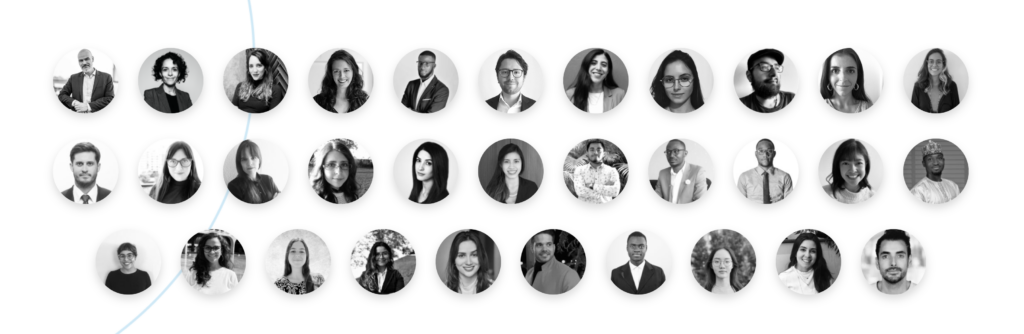
Team Members
worked at DPA in 2023, 44% were men; and 56% were women
They speak
Languages
And reside in
Countries


Thematic Programs
Just Digital Transformations
- Feasibility Study for the Establishment of a Category 2 Centre under UNESCO
- Training in Applied Data Science for HCP Staff: Social Sciences and Data Science Innovation Program
- Environmental and Climate Change Indicators: a Common Approach Using Innovative Methods and Alternative Data Sources
- Enhancing Data Interoperability and Open Data in Mauritania: A Market Evaluation and Recommendations
- OPAL: AI-Powered Flood Early Warning and Cash Transfer System in Senegal
AI and Statistics for the SDGs
Resilient Livelihoods and Ecosystems
Data Feminism
- kNOwVAWdata Training Course: Harmful Practices Module (Child Marriage & FGM)
- Political Parties' Responses to Technology-Facilitated Gender-Based Violence (TF-GBV)
- Updating Mali's Gender Profile
- Towards Caring Cities: Geo-Spatial Analysis of Care Services in Nepal
- Geo-Spatial Analysis of Care Systems in Viet Nam
- Intermediate Evaluation of the European Union Gender Action Plan III (2021–2027)
- Big Data, Gender and the SDGs (Morocco)
- PSEAH Data Analysis and Platform Consultancy
Projects 2025
Projects 2025
Just Digital Transformations
- Feasibility Study for the Establishment of a Category 2 Centre under UNESCO
- Training in Applied Data Science for HCP Staff: Social Sciences and Data Science Innovation Program
- Environmental and Climate Change Indicators: a Common Approach Using Innovative Methods and Alternative Data Sources
- Enhancing Data Interoperability and Open Data in Mauritania: A Market Evaluation and Recommendations
- OPAL: AI-Powered Flood Early Warning and Cash Transfer System in Senegal
AI and Statistics for the SDGs
Resilient Livelihoods and Ecosystems
Data Feminism
- kNOwVAWdata Training Course: Harmful Practices Module (Child Marriage & FGM)
- Political Parties' Responses to Technology-Facilitated Gender-Based Violence (TF-GBV)
- Updating Mali's Gender Profile
- Towards Caring Cities: Geo-Spatial Analysis of Care Services in Nepal
- Geo-Spatial Analysis of Care Systems in Viet Nam
- Intermediate Evaluation of the European Union Gender Action Plan III (2021–2027)
- Big Data, Gender and the SDGs (Morocco)
- PSEAH Data Analysis and Platform Consultancy
Thousand USD in Funding
Donors
Thousand USD in Funding
Donors
Support
Our Work
Credits
Social Media
Credits and Social Media
Authors: Anthony Deen, Amanda Quitério, and Anna Spinardi
Design: Angela Paola Caile
Suggested citation: Data-Pop Alliance (DPA), (2026). Overview and Outlook 2023-2024. Annual Report.
https://datapopalliance.org/annual-report-2025-2026
Copyright Data-Pop Alliance 2026.
All rights reserved.