
Istanbul, 11–12 May 2026 — The Europe and Central Asia Care Forum 2026 brought together policymakers, researchers, academics, and practitioners with the primary objective to drive a systemic shift from fragmented care services towards integrated care economies, by accelerating women’s economic empowerment, ensure decent work, and foster inclusive, sustainable economic growth across the region.
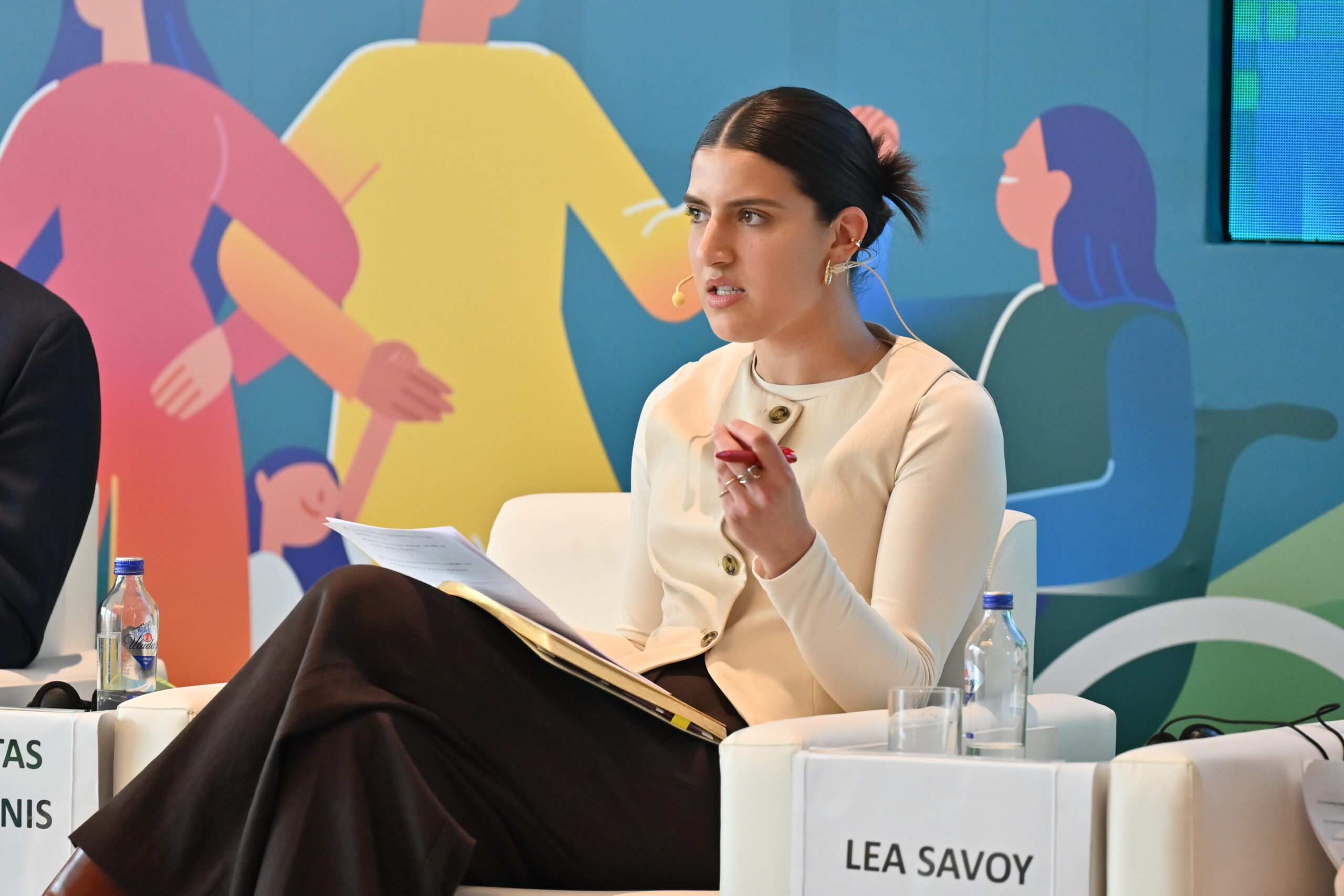
Representing Data-Pop Alliance, Research Officer Léa Savoy joined Session #10, “Demographic Change, Care Needs, and the Power of Data,” to speak about how new data approaches can help close that gap.
The discussion focused on a shared challenge: ageing populations, urbanization, and climate pressures are reshaping daily life, but many of these shifts remain only partially visible in existing data systems. Without better ways to capture care needs, especially unpaid and informal care, it becomes difficult for governments to design policies that respond to reality.

Reflecting on the session, Léa highlighted the importance of making care more visible through data, especially in rapidly changing contexts.
“We know that care needs are evolving quickly and traditional data systems we rely on are not always keeping pace. Innovative approaches, such as geospatial data, has an added value in revealing inequalities that are often hidden in traditional data sets. Geospatial analysis allows us to quantify and visualize care needs in order to inform targeted policy and predict future trends.” - Léa Savoy
The forum, organized by UN Women Europe and Central Asia with support from UK International Development, created a dedicated regional space for these kinds of exchanges, connecting technical conversations on data with broader questions about equity, policy, and lived experience.
For DPA, this is not simply a research question, but an ongoing area of engagement and practice. In collaboration with UN Women across countries in the Asia-Pacific region, the team has been developing approaches that combine geospatial data, administrative sources, and community-informed insights to better understand where care systems are working and where critical gaps remain. This work includes:
- Care Mapping Project – Viet Nam
This ongoing work combines geospatial analysis and policy insights to assess care systems, with a focus on how access to care intersects with urban form, climate risks, and women’s economic participation. - Care Mapping Project – Nepal
Implemented under UN Women’s TransformCare Investment Initiative, this project used geospatial analysis to assess care service availability and identify gaps in infrastructure and access, supporting more equitable planning and investment. - Care Mapping Project – Bangladesh (Dhaka City)
In partnership with UN Women, this project mapped care infrastructure across Dhaka, including childcare, eldercare, and disability services, identifying underserved areas and generating data-driven recommendations to support inclusive urban development.
These initiatives aim to make care systems more visible and actionable by identifying gaps in services and infrastructure at the most detailed level possible, helping policymakers better target investments and interventions.
As discussions continue globally on how to build more inclusive and resilient care systems, one thing is clear: better data is not just a technical need, but a foundation for more equitable outcomes.




![M002 - Feature Blog Post [WEB]](https://datapopalliance.org/wp-content/uploads/2025/10/M002-Feature-Blog-Post-WEB.png)